
Introduction
When a Quiet Voice Sparks a Loud Storm: Inside the Debate Surrounding George Strait in 2026
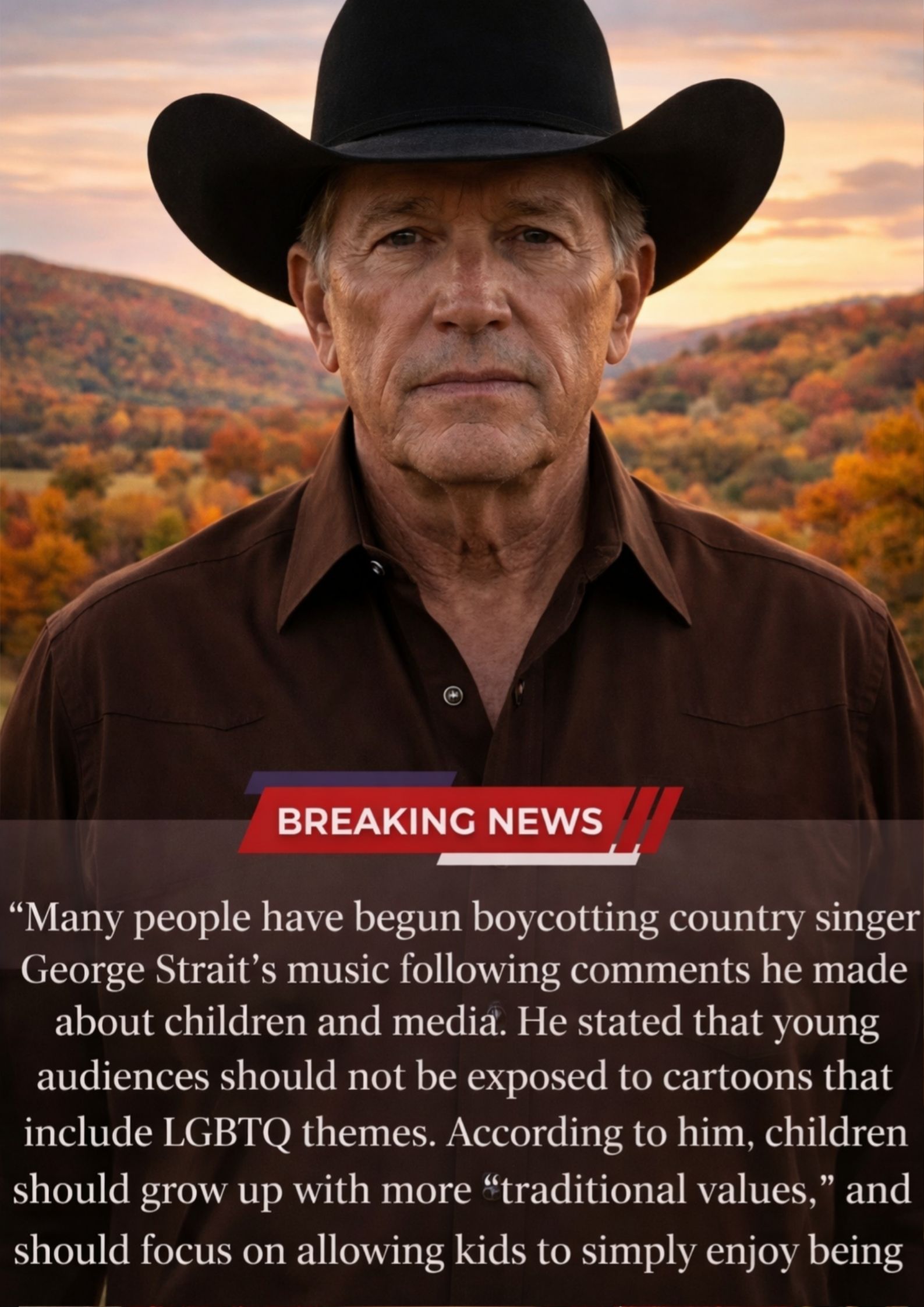
In an era where a single sentence can travel faster than a song ever could, even the most reserved figures can find themselves at the center of a national conversation. That is precisely what has unfolded in recent days, as George Strait—a man long known for his quiet dignity—has become the unexpected focus of online controversy.
What began as unverified reports circulating across social media quickly grew into something much larger. According to widely shared posts, Strait had expressed concerns about the type of content young children are exposed to in modern entertainment, particularly regarding themes that some believe should be introduced later in life. Though no official statement has confirmed these remarks, the conversation surrounding them has taken on a life of its own.
Within hours, hashtags began trending. Opinions formed quickly—and firmly.
For some, the reported comments were deeply disappointing. A number of users voiced frustration, suggesting that if the statements were accurate, they would reconsider supporting Strait's music. Calls for boycotts emerged, with a few voices even urging streaming platforms to reevaluate their association with the artist. In today's digital landscape, where public perception can shift in an instant, such reactions are neither new nor unexpected—but they remain powerful.
Yet just as swiftly, another wave of voices rose in response.
Longtime fans—many of whom have followed Strait's career for decades—stepped forward in his defense. They pointed not to a single reported remark, but to a lifetime of music that has spoken quietly and consistently about love, family, faith, and everyday life. To them, Strait has never been a figure defined by controversy, but by constancy.
And perhaps that is what makes this moment feel so striking.
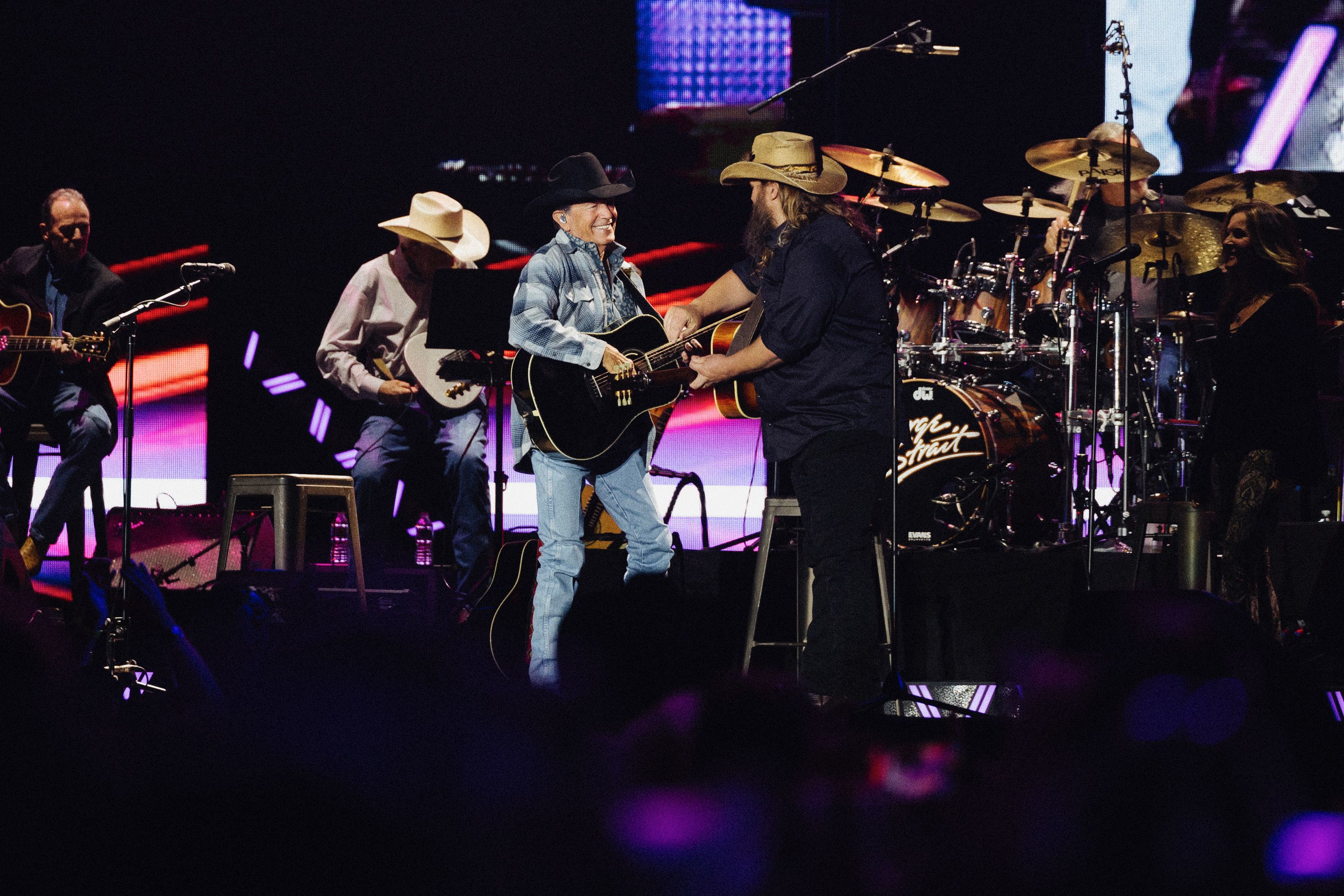
Because for over forty years, George Strait has built his legacy not through headlines, but through songs. With more than sixty No. 1 hits and a career rooted in traditional country storytelling, he has remained one of the few artists who seemed to exist outside the noise of cultural debate. While others took to microphones and social media to declare their views, Strait often chose silence—or, more accurately, music.
Songs like "Amarillo by Morning," "Check Yes or No," and "The Chair" did not argue. They remembered. They reflected. They told stories that felt familiar to generations of listeners, particularly those who saw their own lives mirrored in his lyrics.
That long-standing reputation is part of what has made the current discussion so surprising.
But beyond the individual reactions, the controversy speaks to something broader—something unfolding across the United States and beyond. The question at its center is not simply about one artist, or even one set of comments. It is about the role of culture itself.
What should children see?
When should certain ideas be introduced?
And who gets to decide?
For some, representation and inclusivity in media are essential—tools that help young audiences grow up with empathy and understanding. For others, childhood is viewed as a space that should remain simple, protected from complex social discussions until a later age. These are not new questions, but in the age of social media, they are louder, more immediate, and often more polarized.
Public figures, whether they intend to or not, often become symbols within these debates.
In Strait's case, his image as a guardian of traditional country values has shaped how many interpret the situation. Supporters argue that he has always stood for a certain worldview—one grounded in family, simplicity, and personal belief—and that expressing such views should not be grounds for backlash. Critics, on the other hand, emphasize the influence artists hold and the responsibility they carry when speaking on sensitive topics.

Somewhere between those positions lies a quieter truth.
It is possible that what people are reacting to is not just what was said—or not said—but what George Strait represents to them. For older listeners especially, his music is not merely entertainment. It is memory. It is the sound of long drives, family gatherings, first dances, and quiet evenings that now feel like another lifetime.
And when a figure tied so closely to personal history becomes part of a modern controversy, the reaction can feel deeply personal.
Yet history suggests something worth remembering.
Moments like this, though intense, often pass. Conversations shift. Attention moves. What remains, more often than not, is the work itself—the songs that continue to play long after the headlines fade.
For now, the discussion continues.
Some listeners remain critical. Others remain loyal. Many simply watch, waiting for clarity in a situation shaped largely by unconfirmed reports. Whether Strait chooses to address the matter directly or maintain his long-standing silence remains to be seen.
But perhaps the most enduring question is not about one artist at all.
It is about how we, as listeners, navigate the space between art and opinion in a world where the two are increasingly intertwined.
Because in the end, long after the debates quiet down and the trending hashtags disappear, there is a simpler reality that still holds true:
The songs are still there.
And for millions of people who have lived their lives with George Strait's voice somewhere in the background, that may matter more than anything else.