
Introduction
"WHEN THE ROOM FELL SILENT: Ella Langley's Tribute That Turned a Classic Into a Farewell"
There are performances that entertain, and then there are moments that stay with you long after the lights go down. What unfolded last night was not simply a performance. It was something quieter, deeper, and far more lasting.
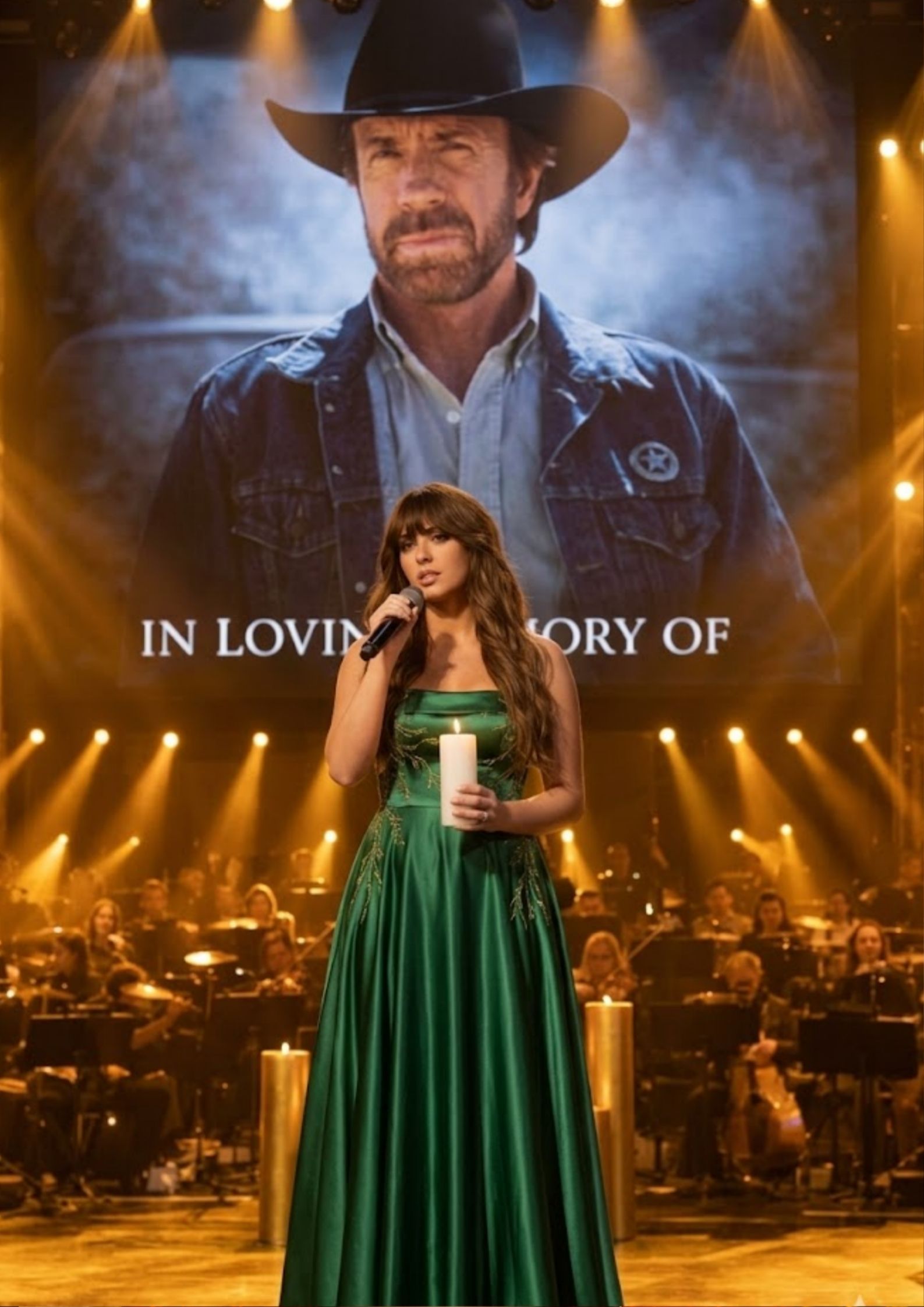
In a world often driven by volume and spectacle, Ella Langley chose a different path. She stepped onto the stage without grand introduction, without dramatic buildup, and offered something rare—a moment of stillness. And within that stillness, she began to sing.
The song was familiar. Timeless. One that generations have carried in their hearts: "I Can't Help Falling in Love."
But what the audience heard was not the version they expected.
It was something more personal.
From the first note, it became clear that this was not about revisiting a classic. It was about transforming it. Ella Langley stripped the song down to its emotional foundation, allowing every word to carry weight. There were no distractions—no elaborate arrangements or theatrical gestures. Just a voice, steady yet vulnerable, guiding listeners into a space that felt almost sacred.
And at the center of that space was a tribute.
A quiet offering of love and remembrance for a figure known to the world for strength and resilience: Chuck Norris.
To many, his name carries an image of power, of endurance, of a life lived boldly and visibly. But what Ella Langley did in that moment was gently shift that image. She did not speak about legacy in grand terms. She did not attempt to define him through reputation or public persona. Instead, she chose something far more human.
She chose to feel.

As she moved through the lyrics, there was a tenderness in her voice that felt almost fragile at times. Not weak, but deeply honest. The kind of honesty that does not try to impress, but simply to connect. Those in the audience described a sensation that is difficult to capture in words—a collective stillness, as if everyone present understood, without explanation, that they were witnessing something meaningful.
It is not often that an entire room falls silent by choice.
But this time, it did.
There were no whispers, no shifting in seats, no restless movement. Just listening. Just presence. And for a few minutes, time itself seemed to slow, allowing each note to linger longer than expected, each lyric to land more deeply than usual.
For older listeners especially, there was something profoundly familiar in that moment. Not just the song, but the feeling behind it. The understanding that love, when it is real, does not end—it changes form. It becomes memory. It becomes gratitude. It becomes something that surfaces unexpectedly, in music, in silence, in the quiet spaces where reflection lives.
Ella Langley appeared to understand that.
Observers noted that she seemed visibly emotional throughout the performance. There were moments when her voice trembled—not in a way that disrupted the song, but in a way that gave it life. That slight imperfection, that human vulnerability, became the very thing that made the performance unforgettable.
Because perfection, in moments like these, is not the goal.
Truth is.

And truth was present in every line she sang.
What made this tribute especially powerful was its restraint. In an era where emotion is often amplified for effect, Ella chose subtlety. She trusted the song. She trusted the audience. And most importantly, she trusted the feeling behind what she was offering.
That trust created something rare: authenticity.
When the final words of "I Can't Help Falling in Love" faded into the air, there was no immediate applause. Instead, there was a pause—a quiet, collective breath held for just a moment longer than usual. It was as if no one wanted to break what had just been created.
Then, slowly, the room responded.
Not with explosive cheers, but with something more meaningful. Applause that built gently, carried by respect rather than excitement. The kind of response that acknowledges not just what was heard, but what was felt.
And what was felt, more than anything, was connection.
Connection to the song. Connection to the memory being honored. And perhaps, for many in the audience, connection to their own experiences of love and loss. Because that is what music, at its best, does. It does not simply entertain—it reflects.
It reminds us of who we have loved, who we have lost, and what remains long after both.
In choosing this song, Ella Langley tapped into something universal. But in the way she delivered it, she made it deeply personal. She did not perform for the audience. She invited them in.
And they came willingly.
In the end, what took place on that stage was not defined by its scale, but by its sincerity. There were no headlines needed, no dramatic declarations required. The moment spoke for itself.
It reminded everyone present that music still has the power to pause time, to soften even the strongest images, and to honor a life not through words alone, but through feeling.
For those who were there, it will not be remembered as just another performance.
It will be remembered as a moment.
A quiet tribute.
A gentle farewell.
And a reminder that sometimes, the most powerful things we can offer are not loud at all—they are simply true.