
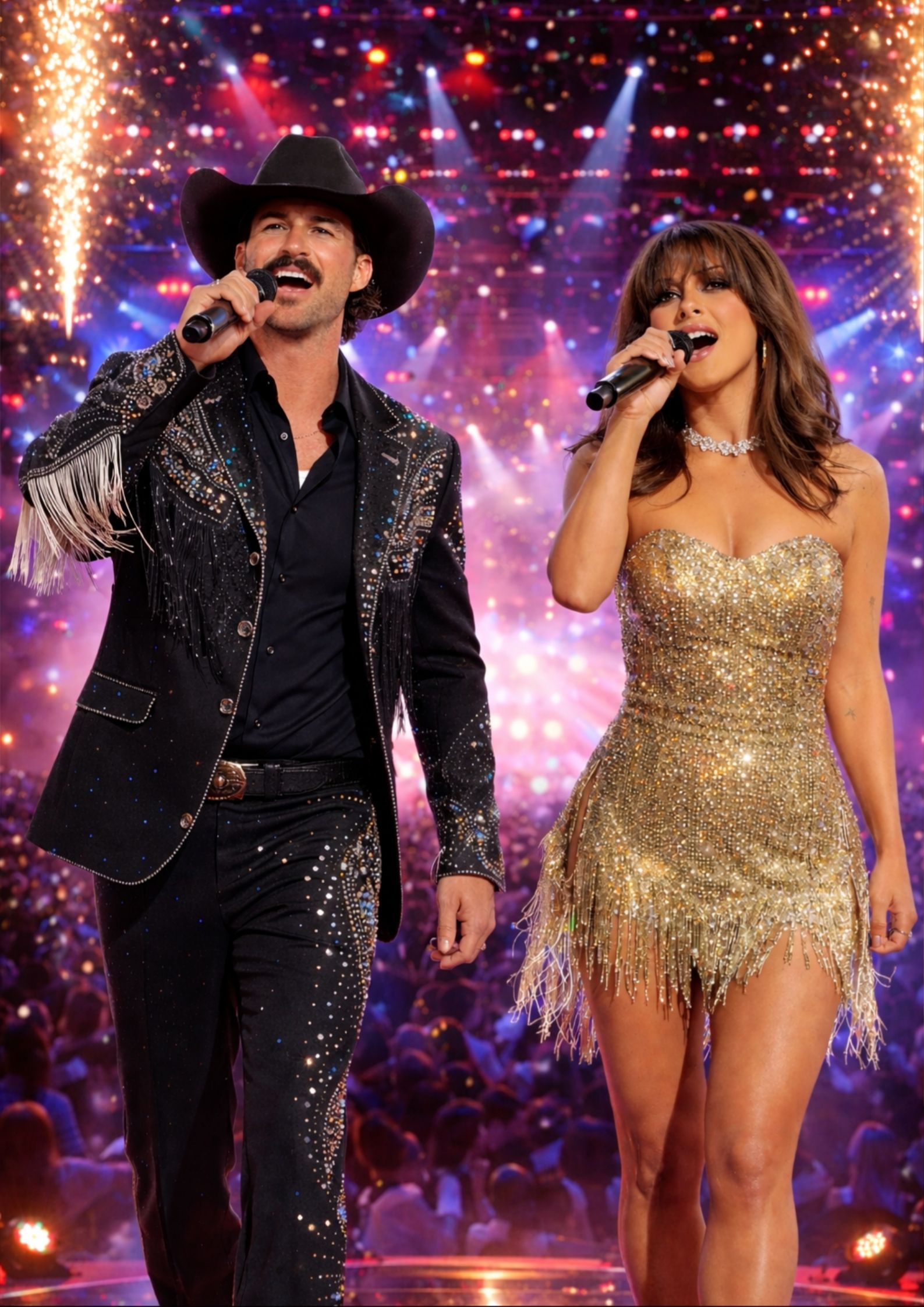
Introduction
When Heartfelt Country Music Takes Center Stage: A Moment America Has Been Waiting For
There are certain moments in American music that feel less like events and more like answers.
Answers to a quiet question many listeners have been asking for years: Can music still feel honest again? Can it still speak to the values that shaped us—without noise, without pretense, without forgetting where it came from?
In a time when spectacle often overshadows substance, the emergence of a moment like this—where Riley Green and Ella Langley step into the national spotlight together—feels not only refreshing, but necessary.
A MOMENT AMERICA HAS BEEN WAITING FOR.
Not because it is louder than everything else, but because it is steadier.
At the heart of this moment is something deeply rooted in the DNA of country music: storytelling that honors real life. Songs that do not chase attention, but earn it. Music that understands that the most powerful emotions are often expressed in the simplest words.
Riley Green has built his reputation on exactly that kind of honesty. His songs carry the weight of memory—front porches, small towns, long drives, conversations that linger after the music fades. There is nothing rushed in his delivery. Nothing forced. He sings like someone who knows that truth does not need decoration.
For many older listeners, that quality feels familiar in the best possible way.
It echoes an earlier era of country music—when songs were not written to impress, but to connect. When a voice could carry both strength and restraint at the same time. When the quiet details of life mattered just as much as the grand moments.
Ella Langley brings something equally important to the pairing.
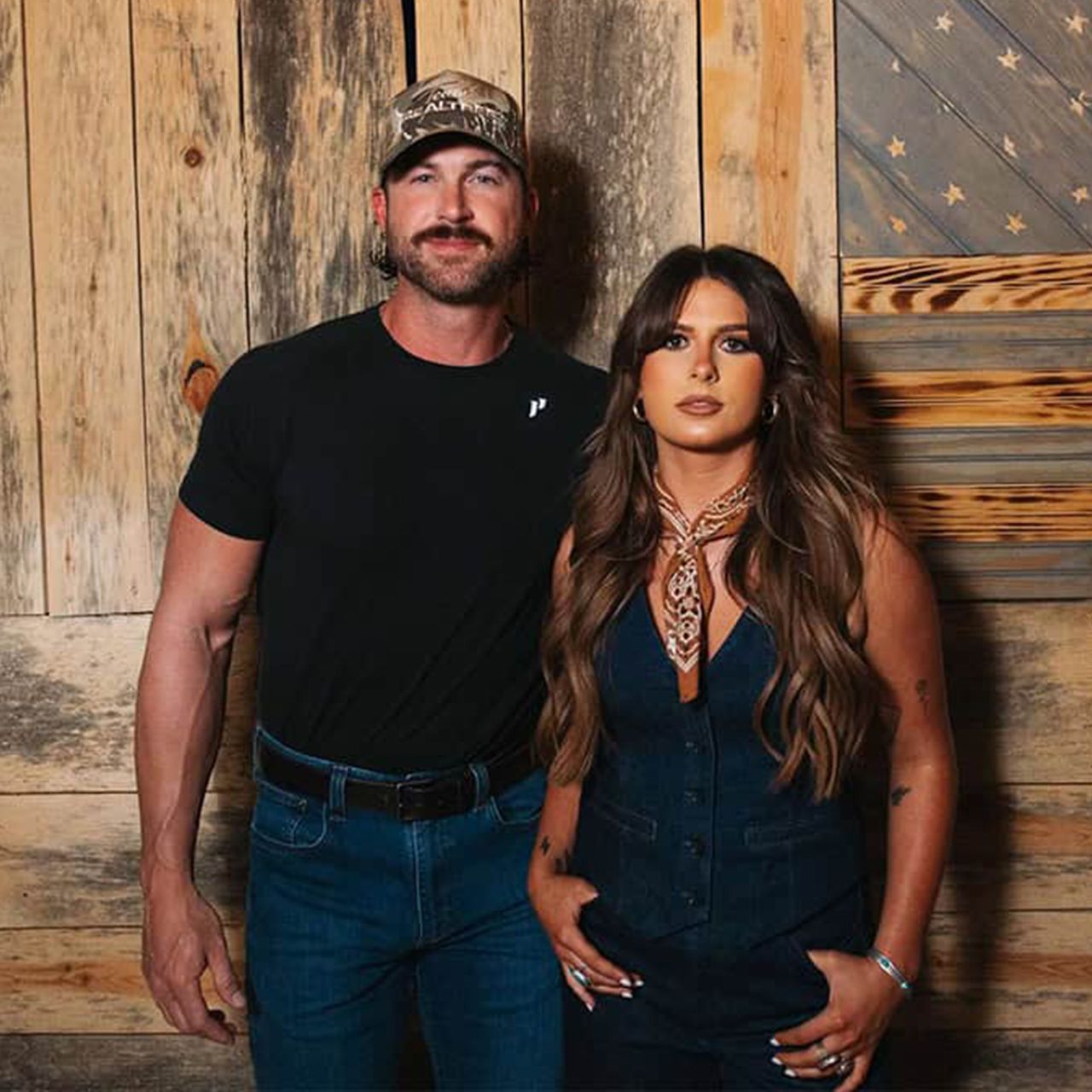
Her presence feels both modern and rooted. There is a strength in her voice that does not rely on volume, but on conviction. She does not overpower a song—she inhabits it. And in doing so, she bridges generations in a way that feels natural rather than calculated. She respects the traditions that came before her, while still sounding unmistakably like herself.
Together, Green and Langley create something rare.
Balance.
Not the kind that comes from compromise, but the kind that comes from shared understanding. They seem to recognize that music, at its best, is not about who stands in front—it is about what stands between them. The space where voices meet, where stories overlap, where listeners find themselves reflected.
That is what makes this moment feel so significant.
Because it is not built on excess.
It is built on presence.

In a halftime setting—traditionally defined by spectacle, lights, and high-volume performance—the idea of two country artists stepping forward with something more restrained feels quietly powerful. It suggests a different kind of confidence. A belief that you do not need to overwhelm an audience to move them. That meaning can travel just as far as noise—sometimes further.
And for many Americans, especially those who have lived long enough to see music change in ways both exciting and disorienting, this feels like recognition.
Recognition that the values embedded in country music—faith, family, freedom, resilience—still matter. Not as slogans, but as lived experience. As something carried through generations, shaped by real lives, and expressed through songs that do not need to shout to be heard.
There is also something deeply unifying about this kind of performance.
In a cultural landscape that often feels divided, music has always held the potential to bring people back together—not by forcing agreement, but by reminding them of shared ground. A melody. A memory. A feeling that transcends difference.
Riley Green and Ella Langley seem to understand that instinctively.
Their collaboration does not feel like an attempt to define America. It feels like an invitation to remember it. Not in grand, abstract terms, but in the small, meaningful details that people recognize immediately: the sound of a familiar chord, the warmth of a voice that feels sincere, the quiet reassurance that some things remain steady even as everything else changes.
That is why this moment resonates beyond the stage itself.
It is not just about two artists performing together. It is about what they represent.
A continuity.
A reminder that country music is not simply a genre—it is a way of telling stories that matter. Stories about where we come from, who we love, what we believe, and how we endure.
And perhaps most importantly, stories that leave room for the listener.
For older audiences, that space is invaluable. It allows reflection. It invites memory. It respects the life already lived, rather than trying to replace it with something louder or newer.
That respect is what gives this moment its emotional weight.
Because when music honors the listener, the listener responds—not with fleeting attention, but with lasting connection.
In the end, what Riley Green and Ella Langley bring to the stage is not just talent.
It is trust.
Trust in the music. Trust in the message. Trust in the audience's ability to recognize something real when they hear it.
And that is why this moment feels like something America has been waiting for.
Not a spectacle.
A return.
A return to the idea that music can still unite without dividing, inspire without overwhelming, and speak with clarity in a world that often feels too loud to listen.
When heartfelt country music takes center stage, it does not just fill the air.
It fills something deeper.
And for those willing to listen, it reminds us that the most enduring songs are not the ones that shout the loudest—but the ones that stay with us long after the stage goes quiet.